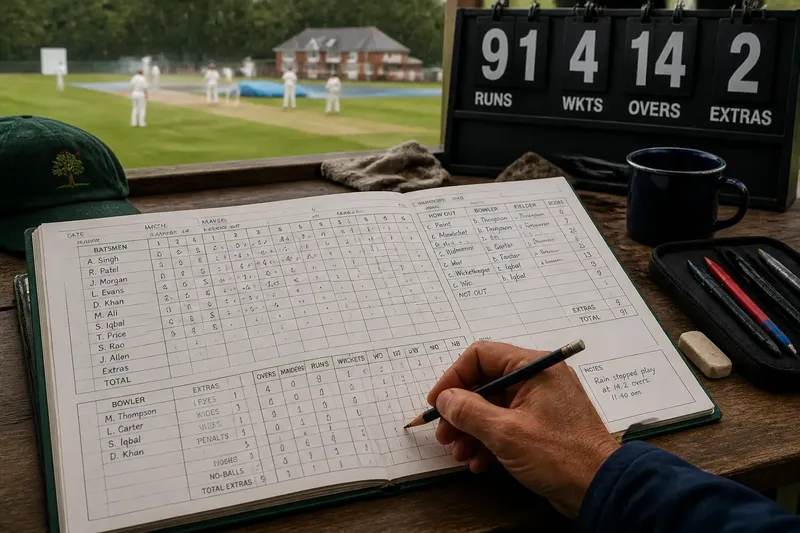
Tea, Lunch and the Shape of a Day at the Cricket
Cricket intervals make a long-form match easier to follow: use tea and lunch breaks to read the score, mark what changed and prepare for the next session.
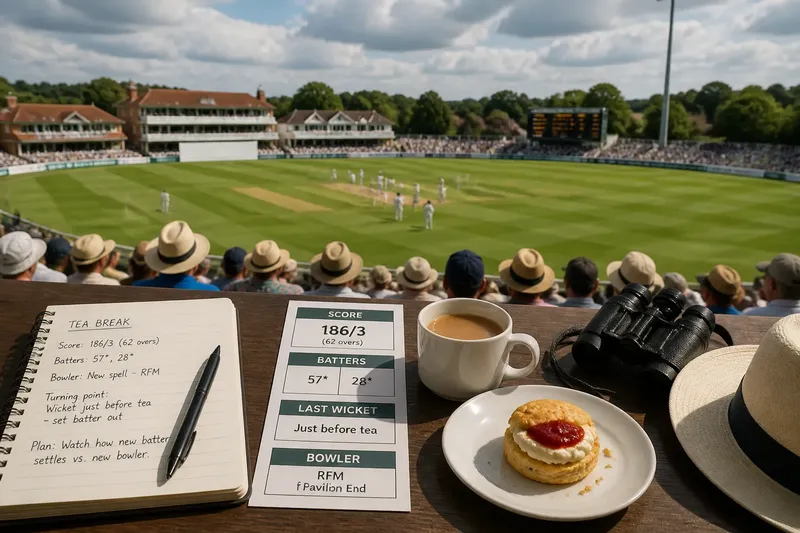
The tea interval arrives just as a batter settles in, and the scoreboard still seems to be telling several stories at once. A few minutes later, players leave the field and the crowd heads for tea, food or a stretch. Cricket intervals are useful pauses for a spectator: they give you a moment to read the score, identify what changed in the session and decide what to watch next.
In long-form cricket, play is divided into sessions separated by scheduled breaks. The familiar names are lunch and tea, with a longer interval between innings in some circumstances. Exact timings and arrangements vary by match and local conditions, so check the ground’s schedule or broadcast information if you need to know when play resumes. The routine below helps you use each pause to keep your place in the match.
What should you notice before play stops?
As a session approaches its scheduled break, take in the state of the innings before the players walk off. You do not need to memorize every delivery. Start with a small set of details that explain the situation:
- Runs and wickets: Note the team’s score and how many batters have been dismissed. The same total can mean very different things early or late in an innings.
- Batters at the crease: Identify who is facing and who is at the other end. Their partnership may be central to what happens next.
- Overs and bowlers: Look at how much of the innings has been bowled and which bowlers are operating. A change of bowler can alter the contest after the break.
- Match position: In a multi-innings match, check which side is batting and whether a target or lead is relevant. The scoreboard or commentary usually supplies this context.
- Conditions you can see: Notice whether the light, surface or weather has changed. Treat this as context, not a certain prediction of how the ball will behave.
If you are at the ground, the score display and the last few overs are enough to make a mental note. Watching at home, pause on the broadcast graphic or write a brief line in your phone. Keep it simple: “home side, three down; two settled batters; new bowler at the far end.” That note gives you a starting point after the interval.
How do you use a tea or lunch interval?
First, orient yourself to the innings. Confirm the score, wickets and batters, then check whether the side is building, recovering or trying to force the pace. Avoid reading the total alone. A modest score with few wickets lost may leave room to build; a larger score after frequent dismissals can signal a less secure position.
Next, identify the session’s turning points. Think about when a wicket fell, when a bowler changed ends or when a partnership began to look settled. You can use the scoreboard’s recent-overs display, a scorecard or the broadcaster’s short recap. The point is not to reconstruct every ball. It is to know which event most changed the choices available to the teams.
Then look ahead. Ask what the batting side may want from the next session: to protect wickets, add runs steadily or make a declaration decision later in the match. Ask what the fielding side may try: keep pressure on, bring on a different bowler or attack a new batter. These are questions to watch, not predictions you need to get right.
Finally, check the return time and settle in before play resumes. At a ground, the bell, announcement or posted schedule can help. On a broadcast, the coverage usually signals the restart. Use the break for food, water and a short walk, but leave enough time to find your seat or return to the stream before the first ball.
What changes from one session to the next?
A session break does not reset the match. The score and dismissals carry on, but the teams get a chance to regroup. The next period may begin with the same batters and bowler, or with a tactical change. A new batter has to settle; an established pair may resume with the same plan. Watch the first few overs for clues about whether either side has adjusted.
Conditions can also shift during a long day. Clouds, wind, fading light or a surface that has seen more use may affect how players approach the next spell. A spectator can notice these changes without trying to diagnose their technical effect. Compare what you see after the break with the previous session: Is the field set differently? Has the bowling changed? Are the batters leaving more deliveries or looking to score?
Imagine you arrive back from lunch to find the batting side has added runs but lost a wicket just before the interval. You note the incoming batter, check which bowler has the ball and watch the field at the start of the session. If the fielders press close and the bowler attacks the new batter, you can see that the wicket has shaped the immediate contest; if the field spreads and the batters settle, the teams may be taking a more patient approach. Either way, the score and the opening exchanges give you a clear way back into the match.
Which questions help you follow the intervals?
Is tea always taken at the same time?
Tea is a scheduled interval in many long-form matches, but its timing can depend on the match format, the day’s schedule and interruptions to play. Check the ground or broadcast timetable for the expected restart rather than relying on a routine from another match.
Does the score change during lunch or tea?
No runs are added while play is stopped, and no deliveries are bowled during the interval. The score remains as it stood when the players left the field; it changes when play resumes and the next ball is delivered.
What is the interval between innings?
It is the break between one team’s innings and the next, rather than the regular pause within a day’s play. Its timing and length can differ from lunch or tea, so use the match schedule or commentary to follow the changeover.
What if rain interrupts a scheduled break?
Rain can delay the start or resumption of play, and the day’s timetable may be adjusted. Follow the official ground announcement or broadcast update, then note whether the teams return to the same innings and score.
How can you keep a simple session note?
A short note is especially helpful if you leave the ground, join a broadcast late or watch across several days. Use a notebook, the notes app on your phone or the match’s scorecard. Record only what will orient you later:
- The score and wickets at the break.
- The names of the batters at the crease.
- The bowler or bowling change that mattered most to you.
- A turning point, such as a wicket or a developing partnership.
- One question for the next session, such as whether the new batter can settle.
Keep observation separate from assumption. “A wicket fell before tea” is a fact you can verify on the scorecard. “The batting side will collapse” is a forecast. Recording the first and leaving the second open makes the next session more interesting: you can watch to see which way the contest actually develops.
Used this way, cricket intervals are not empty gaps in the day. They are natural checkpoints: read the score, identify the session’s turning point, consider the next tactical question and return in time for play. The habit works whether you are following a match from the stands or dipping into a broadcast between other plans.