Why a Cricket Innings Has a Different Shape in Each Format
See how cricket innings change from T20 to Test cricket, and choose the format whose pace, length and match structure best suit your viewing time.

A T20 match can turn from a quiet start to a tense finish before a viewer has settled into the evening. A Test match may still be unfolding after several sessions, with the same innings continuing across days. The difference begins with format: cricket innings take their shape from how many overs are available, how many innings each side receives, and whether there is a fixed stopping point.
Those rules change the rhythm of play without changing the basic aim of scoring runs and dismissing batters. Understanding the structure makes it easier to choose a match that suits your time and attention, and to follow why one innings seems to race while another keeps opening new possibilities.
What gives an innings its shape?
An innings is a team’s turn to bat. In limited-overs cricket, the batting side has a set number of overs, and it also stops if the team loses all its wickets. In longer cricket, there may be no fixed over limit for an innings; it can end when the captain declares, the side is dismissed, or the match reaches its time limit.
An over consists of six legal deliveries. A wide or no-ball does not count as one of those six, so the over continues until six legal balls have been bowled. This gives a useful measure of the innings’ remaining work: in a limited-overs match, viewers can see the finish line approaching one over at a time.
How many innings each side receives matters just as much. In a one-innings-per-side match, each team bats once. In a Test match, each may bat twice, though the match can end before both sides complete both innings. That second chance changes how a team’s total fits into the larger contest: a score is not necessarily the final word, because there may be another turn to bat.
How does T20 make an innings feel immediate?
T20 gives each side one innings, limited to 20 overs. That boundary creates a compact arc: the innings has a clear end even if wickets remain, and every unused over disappears when the limit is reached. The audience can follow the remaining overs as a visible countdown.
The structure suits viewers who want a complete match in a relatively contained period, including people watching after work or following a tournament with several games in its schedule. It also suits newcomers who prefer an easy-to-grasp boundary: each side gets one turn, and that turn has a defined ceiling.
What matters structurally is not a particular batting plan, but the relationship between time and opportunity. If a team loses wickets, it still has only the overs left on the clock. If it keeps its wickets, the innings still ends at the over limit. The shape is therefore compressed from both ends: the side must make its total within a fixed allotment, and the other side has a similarly defined chase.
Imagine you have an evening free but cannot stay through a long match. You choose a T20 fixture and see that one side has finished its 20 overs; the chase now has the same maximum number of overs, unless the target is reached or the batting side is dismissed sooner. That clear boundary makes it straightforward to know what remains, even if the contest is close.
Why does a one-day innings leave more room?
One Day International cricket also gives each side one innings, but the usual limit is 50 overs. Compared with T20, the innings has a longer runway and more deliveries in which its shape can change. A period of careful scoring can be followed by a burst of runs, and a team has more time to recover from an early loss of wickets.
The format suits viewers who enjoy a match with a beginning, middle and finish in one day, but want more room for the score to develop than a short-form game allows. It is also a useful choice for someone who wants the clarity of one innings per side without the open-ended duration of a Test.
The innings limit still gives the contest a firm endpoint. A side can be dismissed before using its overs, or it can reach the cap with wickets in hand. Either way, the opposing team receives one innings with a target to pursue. That makes the match’s broad shape easy to track: one total is set, then the other side gets its opportunity to match or pass it.
In practical viewing terms, the extra overs make the innings feel less like a short countdown and more like a long sequence of phases. The total can build gradually, and the remaining overs remain a simple way to understand how much time the batting side has. If you like a match that occupies much of a day without stretching across several days, this format often fits.
What changes when a Test has two innings?
Test cricket is built around two innings per side, with no fixed over cap for an innings. A match can last up to five days, but it may finish earlier. A side bats until it is dismissed or declares, and the match’s allotted time can run out before every possible innings is completed.
That arrangement gives the innings a different relationship to the match. A team’s first total is only one part of the contest; the other side responds, and the first team may then bat again. A side that leads after the first innings has not automatically won. There can be another innings for each team, depending on the score and how much time remains.
Test cricket suits viewers who enjoy returning to the same contest over several days and seeing the score acquire meaning through successive innings. It also suits people who are curious about how a match can remain unresolved even when one team has already posted a substantial total. The structure rewards patient following: a position can change as teams take their turns.
Unlike limited-overs cricket, the end of an innings is not announced by a set number of overs. A declaration allows a captain to end the team’s innings voluntarily, while dismissal ends it when the batting side has no further available batters. The match’s time limit adds another boundary, but it does not create the same predictable countdown within each innings as an over cap.
Which format fits your time and attention?
Use the structure as your first filter, rather than trying to judge which format is best. Ask how long you want to follow one match, whether you like a clear finish line for each innings, and whether you want the story to continue through more than one turn at bat.
- Choose T20 if you want one innings per side with the shortest fixed over limit and a compact match to follow.
- Choose a One Day International if you want one innings per side but prefer a longer arc within a single day.
- Choose Test cricket if you want multiple innings per side and are comfortable following a match across several days.
Think about the viewing setting, too. A short match may fit a planned evening; a one-day match can suit a relaxed day at home; and a Test can work well when you want to check in on an ongoing contest. These are preferences, not rules. You can also watch a limited portion of any format and still understand the score, though the innings structure helps explain what that score means.
What do viewers often ask about innings?
Does every team use all its overs?
No. In limited-overs cricket, an innings ends if the side is dismissed before its allocation is complete or reaches the over limit with wickets remaining. A Test innings has no set over cap.
Can a Test match end before every side bats twice?
Yes. A result can settle the match before all four potential innings are completed, and the allotted playing time can also end with the match drawn. The two-innings structure describes each side’s opportunity, not a promise that every opportunity will be used.
Why do some matches have fewer overs than usual?
Interruptions such as rain can reduce the available time, and playing conditions may revise the over allocation. The match’s announced rules explain how the adjusted innings are handled.
Is a longer innings always the more important one?
Not necessarily. Its significance depends on the format and the match situation: a limited-overs total is followed by a chase, while a Test total is part of a sequence that may include another innings. The innings count gives the score its context.
How can you follow the structure as you watch?
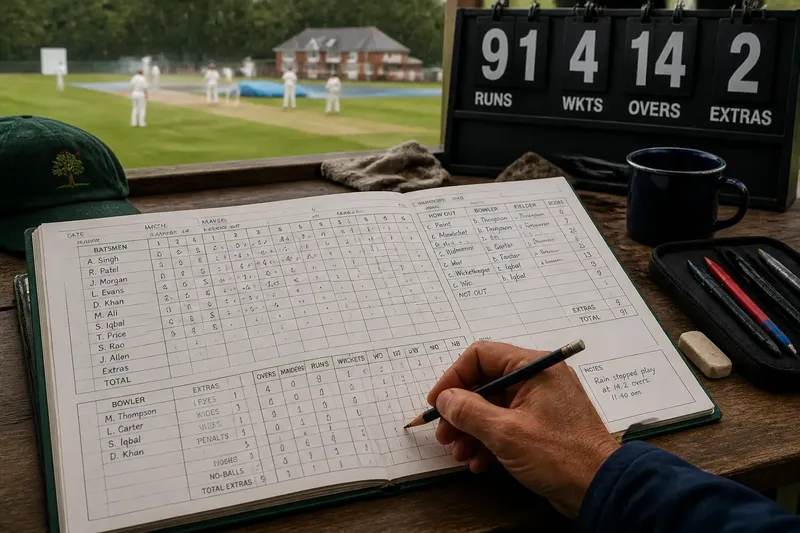
Before play, check the format and the number of innings each side receives. During a limited-overs innings, note the over limit and whether the side has been dismissed; during a Test, keep track of which innings is underway and how much of the match remains. A scorecard or the match display usually identifies the innings and overs, so you can quickly see whether the current turn is nearing a fixed cap or remains open-ended.
Those details are enough to make the three formats feel distinct. T20 offers a short, capped innings; the one-day game gives that same one-turn structure more room; and Test cricket links multiple innings across a longer match. If you search for the shape of a cricket innings, start with those two questions: how many overs can the side use, and how many times will each team bat? The answers tell you what kind of match you are settling in to watch.